Tap the Gap
The goal
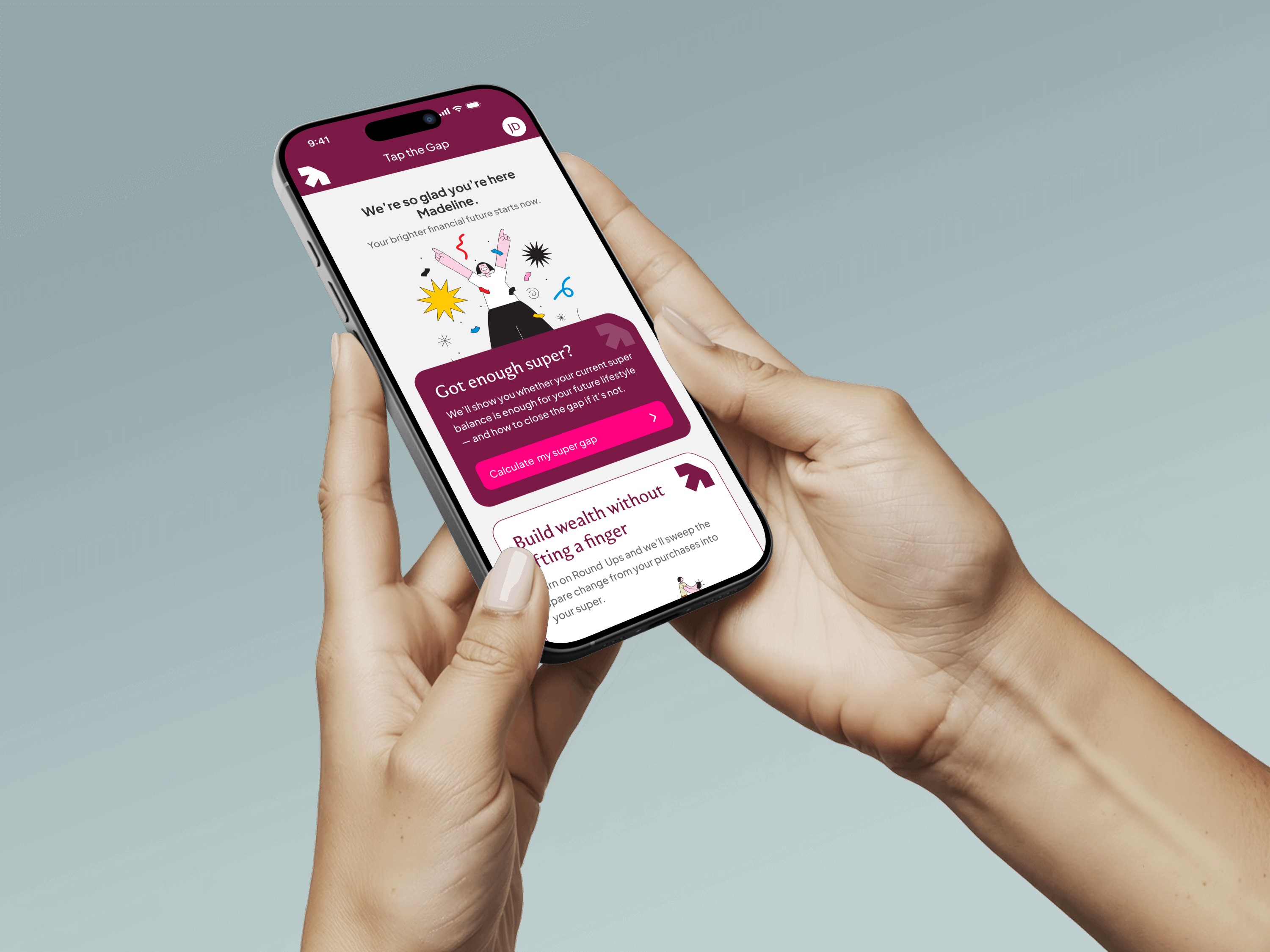
To create a fintech platform that combines financial literacy with automated "round-up" technology to help Australian women build superannuation wealth.
The dynamic
I served as a high-level strategic resource to the founder/product owner, providing "just-in-time" direction rather than full-time execution.
The value
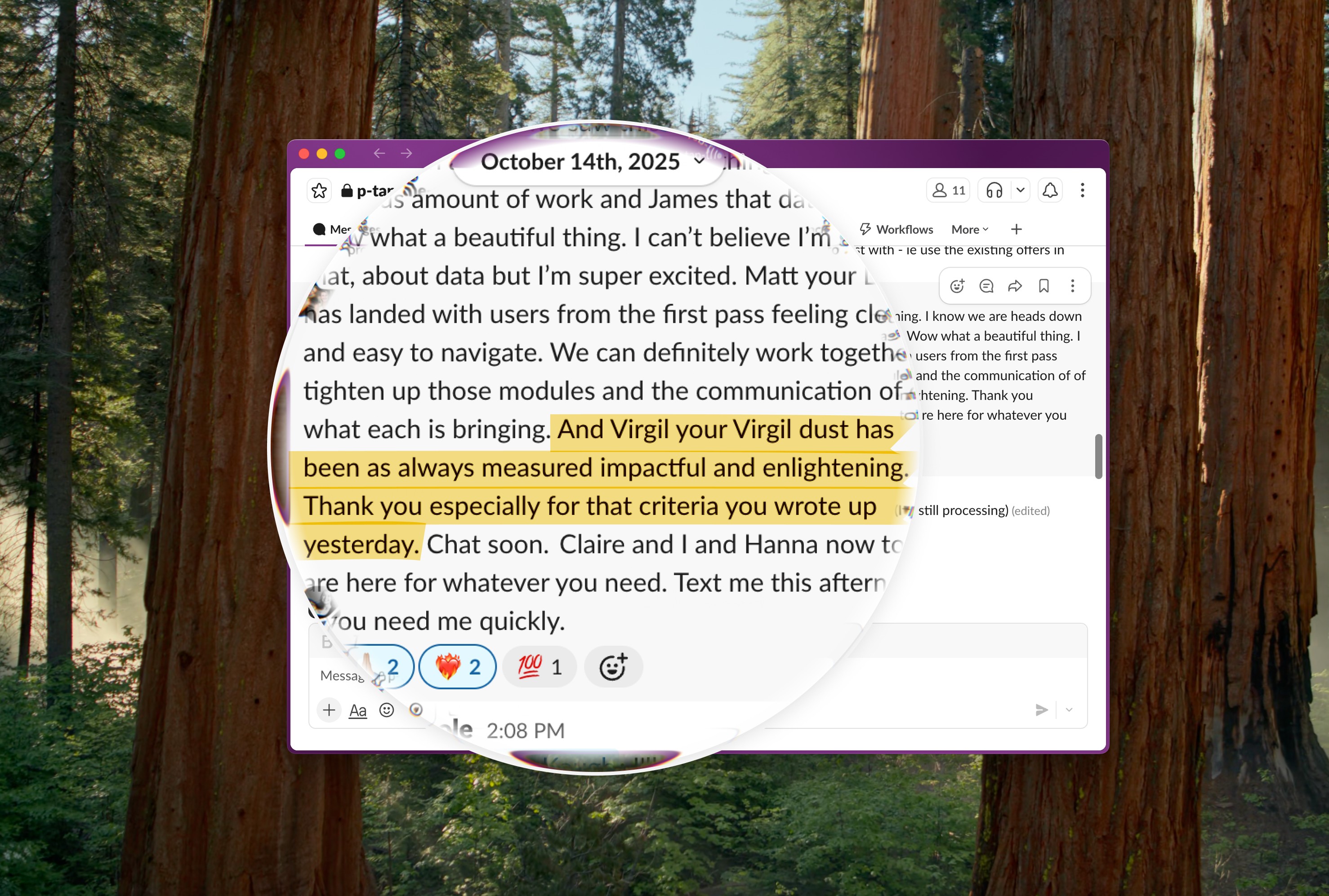
I delivered high-leverage interventions that leadership validated as "measured, impactful and enlightening," ensuring the project maintained velocity and quality without requiring my full-time presence.
The outcome
2025 Anthem Awards: Bronze winner for Product Innovation in the Diversity, Equity, Inclusion, and Belonging (DEIB) category.
User validation: Counting 50+ user tests across weekly sprints, creating a rapid feedback loop that fed insights immediately back into discovery and development streams.
Strategic validation: Achieved deep emotional product-market fit, with users describing the MVP not as a banking app, but as a "secret club" for "beating the system".
Providing strategic product direction and design leadership for a startup focused on closing the superannuation gap for women, I functioned as Principal Designer. I partnered with client stakeholders to guide the core value proposition, integrating open banking, round-up technology, and retail features into a cohesive product experience. I mentored and supported the design lead through the end-to-end delivery process, ensuring high-quality execution and maintaining strong stakeholder alignment at critical project milestones.
I guided the overarching UX strategy to ensure the platform delivered a seamless and delightful experience, critical for building trust in the financial sector. I oversaw the definition of service design flows and the establishment of a scalable design system, empowering the delivery team to move fast without compromising quality. Finally, I validated product decisions Finally, I validated product decisions through lean user research, UX reviews, and UI component design, ensuring the application effectively bridged the gap between financial literacy and tangible action.
The challenge
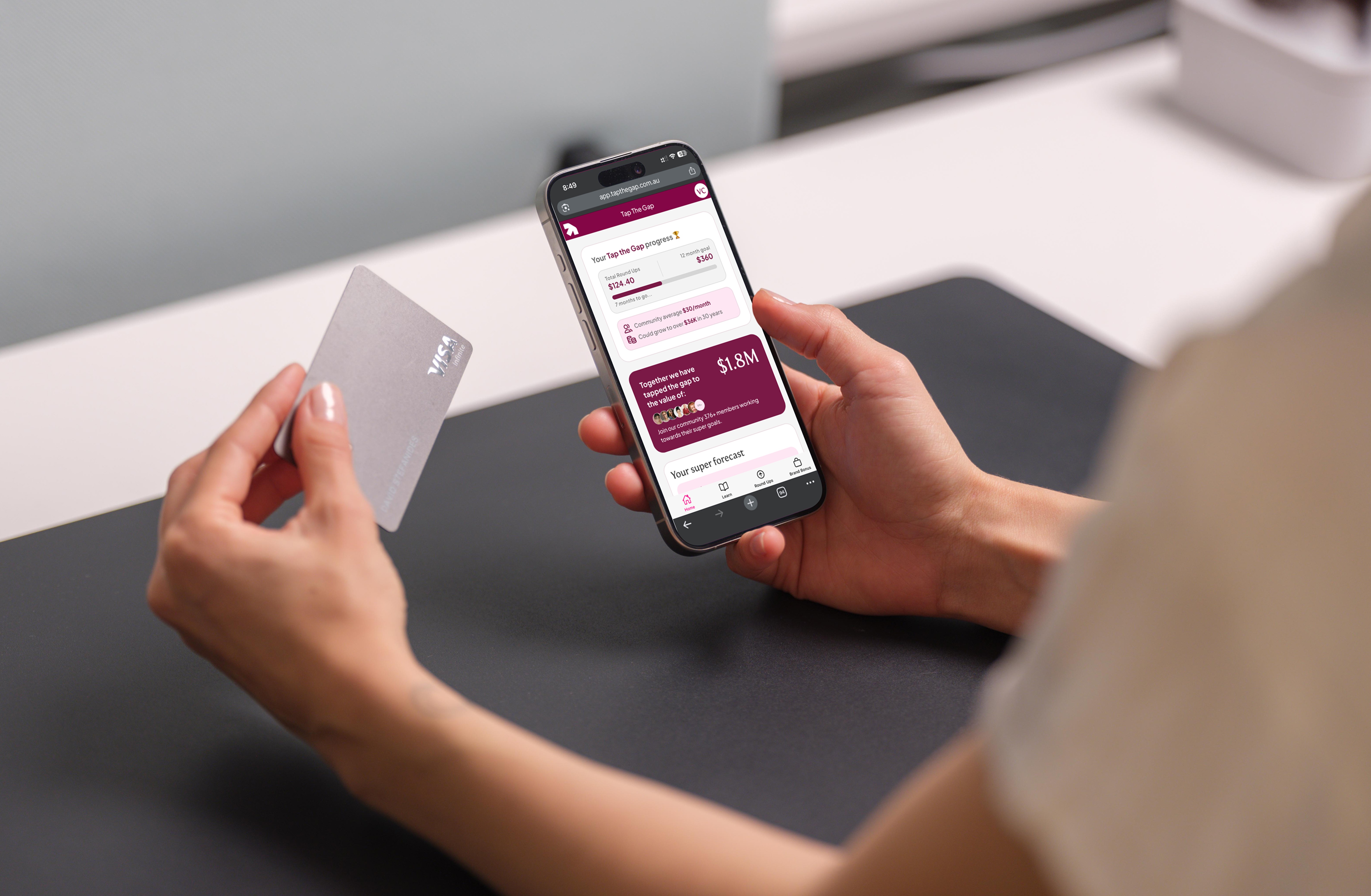
The "Super Gap" in Australia is a systemic issue where women retire with significantly less savings than men. Tap the Gap founder Lucy Kough recognised an opportunity to create a platform that combines financial literacy (education) with automated action (round-ups & cashbacks).
The constraint
The limiting factor was trust. We were asking users to connect their bank accounts (Open Banking). If the UX felt compromising, "buggy" or "complicated" for even a second, we would lose their trust—and their money.
Our hypothesis
We needed to validate, "Can we motivate users to enable round-ups by rapidly demonstrating the value of closing their super gap?"
The strategy
We utilised the Design Sprint methodology and employed rapid collaborative ideation activities such as Crazy 8s, visual heatmapping, and impact/effort matrices for lean ideation and ruthless prioritisation of work to build an emotional connection between users and their current superannuation position.
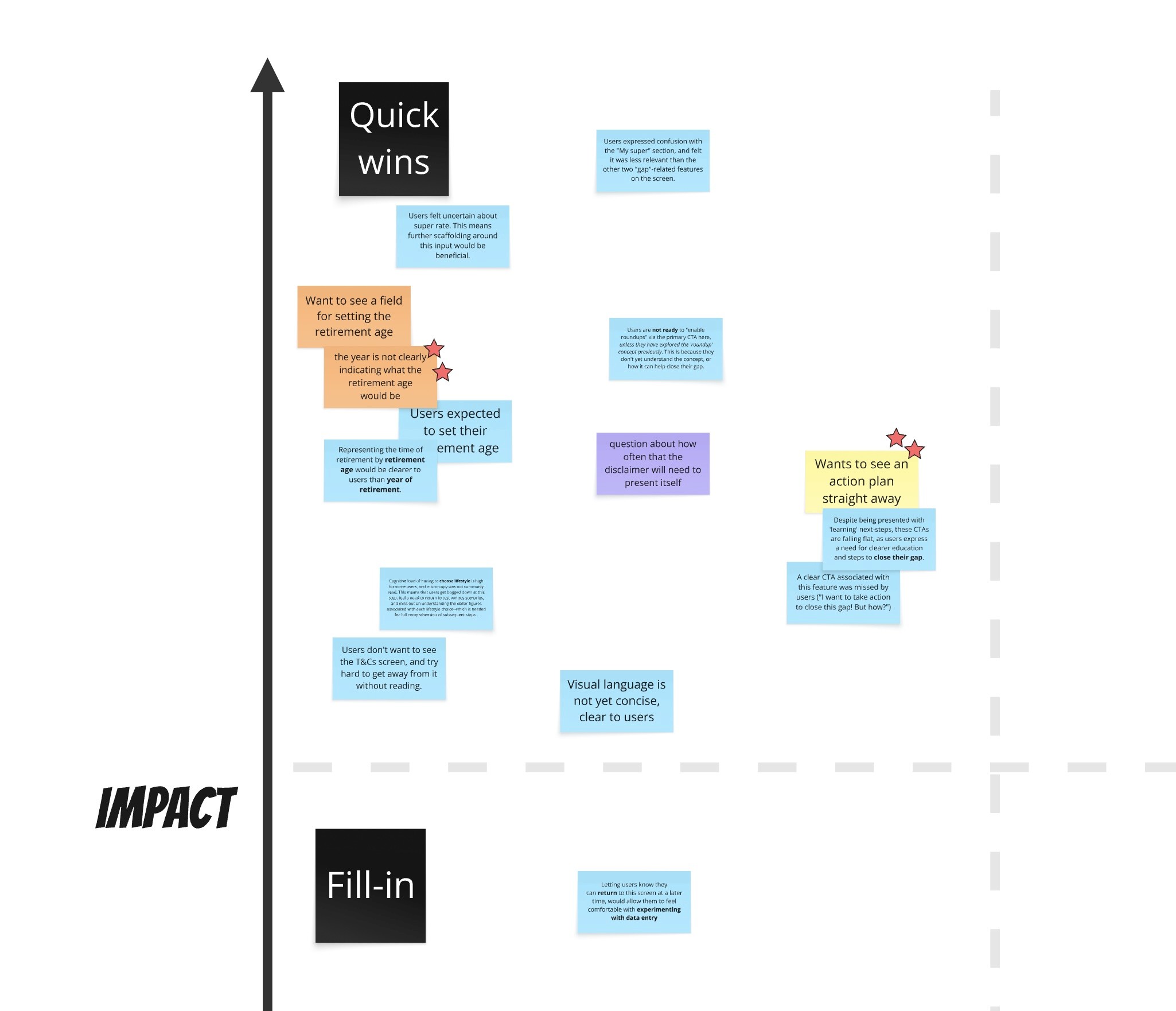
Clarity and consensus: With a very tight budget and timeline, we needed to focus on the features and challenges that would deliver the highest impact for the MVP, deferring 'nice-to-haves' for the future.
The messy middle
We were determined to test early and often, with real users. With such a lean team, budget, and timeline, my first task was to build the founder’s capacity to recruit, plan, and conduct user tests. This decision proved valuable—within a week, the founder was already delivering immense value, and the development team was soon able to rely on quality insights from weekly usability tests being fed directly back into the design and development cycle.
During user testing, we encountered significant friction regarding trust and tone.
The friction of data anxiety
While the concept was strong, the execution of the "Open Banking" connection triggered anxiety.
User Voice: One tester flagged a "major issue with looking at the list of personal data points she is giving the product access to".
User Voice: Another noted, "Concern about safety... feel a bit nervous connecting to a bank".
Insight: Forced to use cumbersome third-party open banking integrations, we were unable to control much of the critical-path UX during the integration journey.
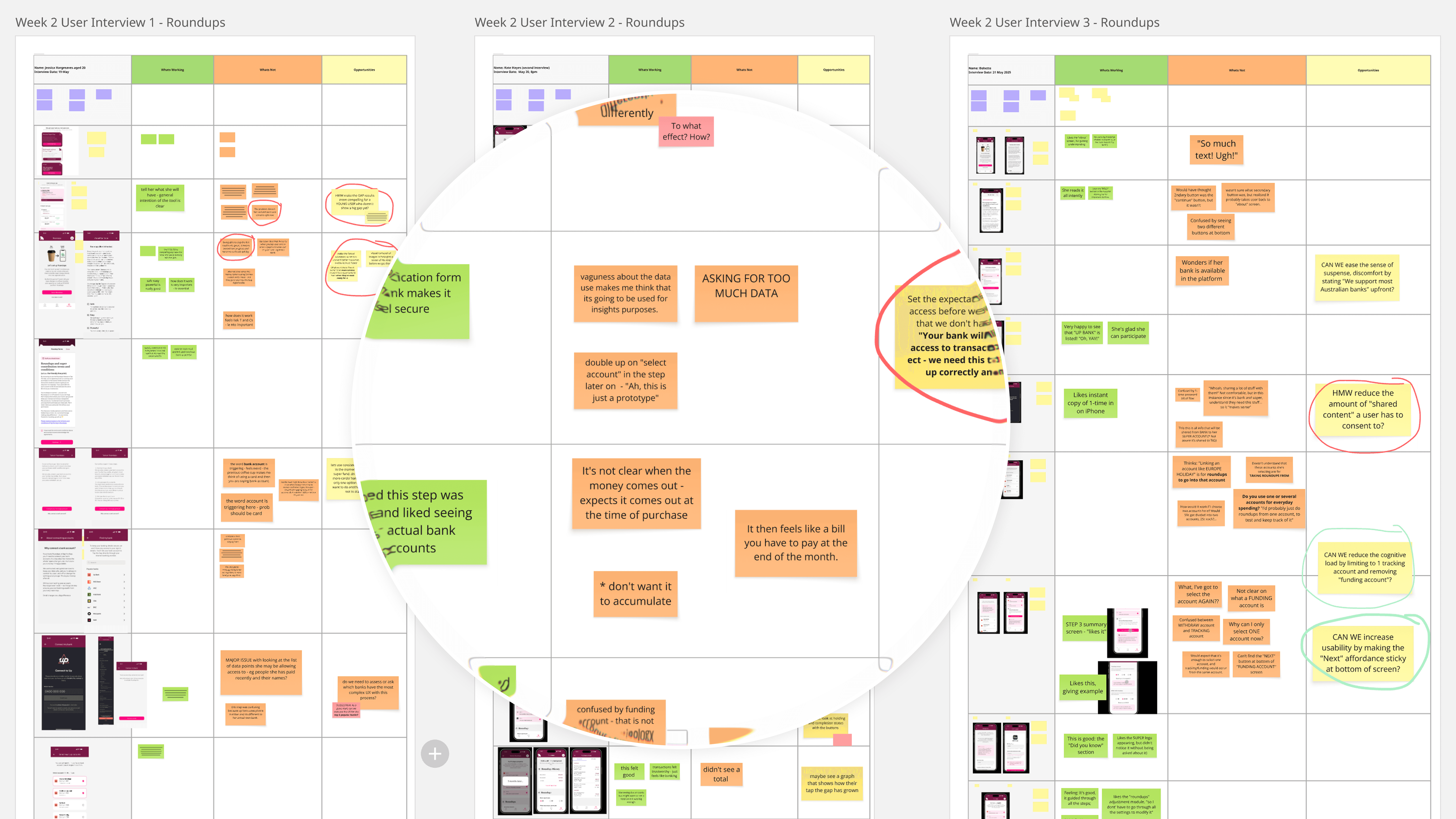
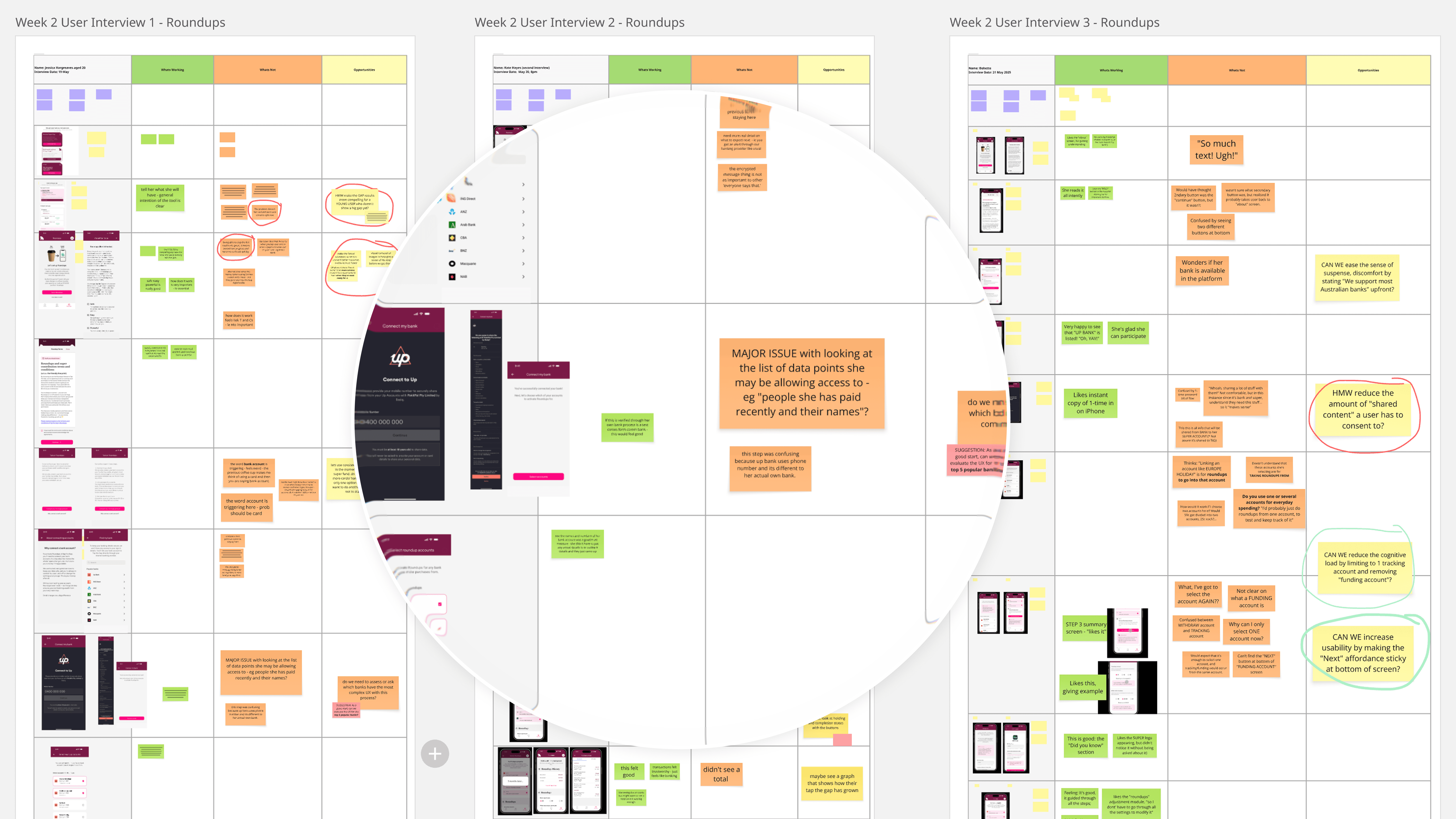
Synthesising 50+ user tests: We categorised raw feedback weekly to identify the 'trust' friction points immediately.
A strategic pivot: We realised we couldn't rely on third-party integrations to "ask" for data without generating anxiety; we had to pre-load the user journey with straightforward, honest, and trustworthy guardrails, setting up a comfortable "give" context as the first priority. The UX shifted heavily toward building emotional alliances that foster trust.
We identified opportunities to reduce discomfort by improving wayfinding and enabling safe, exploratory, noncommittal navigation. This allowed users to explore the app more freely, build contextual understanding, and opt in to “learning more,” effectively reducing heightened anxiety and increasing trust.
We leaned heavily into a specific, non-corporate tone. Users validated this, explicitly asking us to "show me the girl maths" and praising the "feminine side" of the interface.
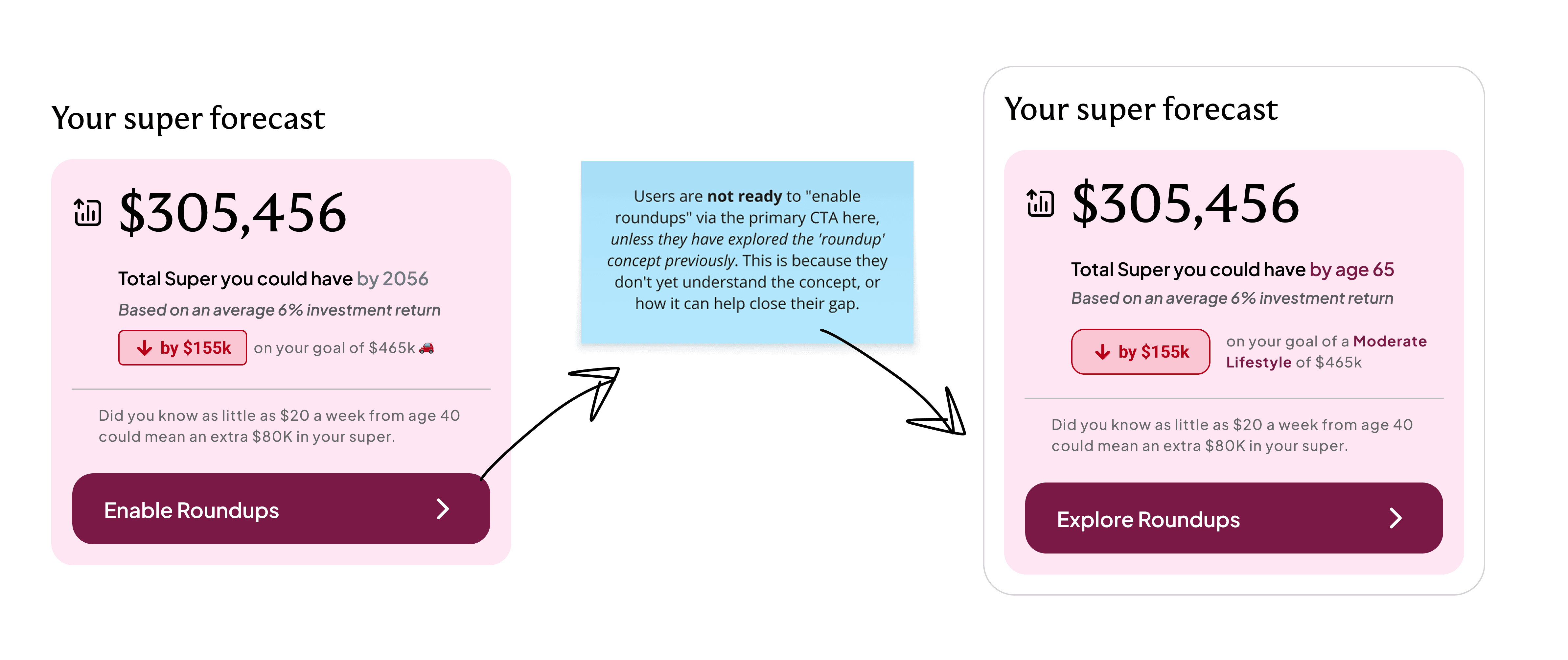
Testing → Insight → Improvement: Rapid test-driven iteration allowed the microcopy and interaction flows to improve trust and task completion week-on-week.
Stakeholder management & collaboration
The "force multiplier" effect
As a Principal Designer, my goal was to bring maximum clarity with minimal friction. I operated as a fractional lead, dropping in at critical junctures to unblock the team and elevate the product vision. My presence acted as a stabiliser and a driver of value for senior leadership.
The evidence
The founder validated this engagement model, describing my contribution as a unique stabiliser for the project.
The outcome
The ultimate measure of success for this MVP was whether users felt safe and empowered enough to connect their money to an automated financial platform. Did we manage to build the required emotional resonance? The qualitative data from our "Wall of Truth" confirmed where we succeeded:
Trust established
After fundamental iterative UX adjustments to the onboarding flow, user feedback shifted from anxiety to: "Transactions feel trustworthy... just feels like banking".
The "north star" insight
We moved the experience beyond “utility” to community building. When viewing the wealth projection screens (showing a potential $1.8M outcome), a user gave us the best possible validation:
"I mean, I think that makes me feel like I'm part of a gang of girls who are all beating the system... Yeah, I feel good. I feel like I'm part of a secret club."
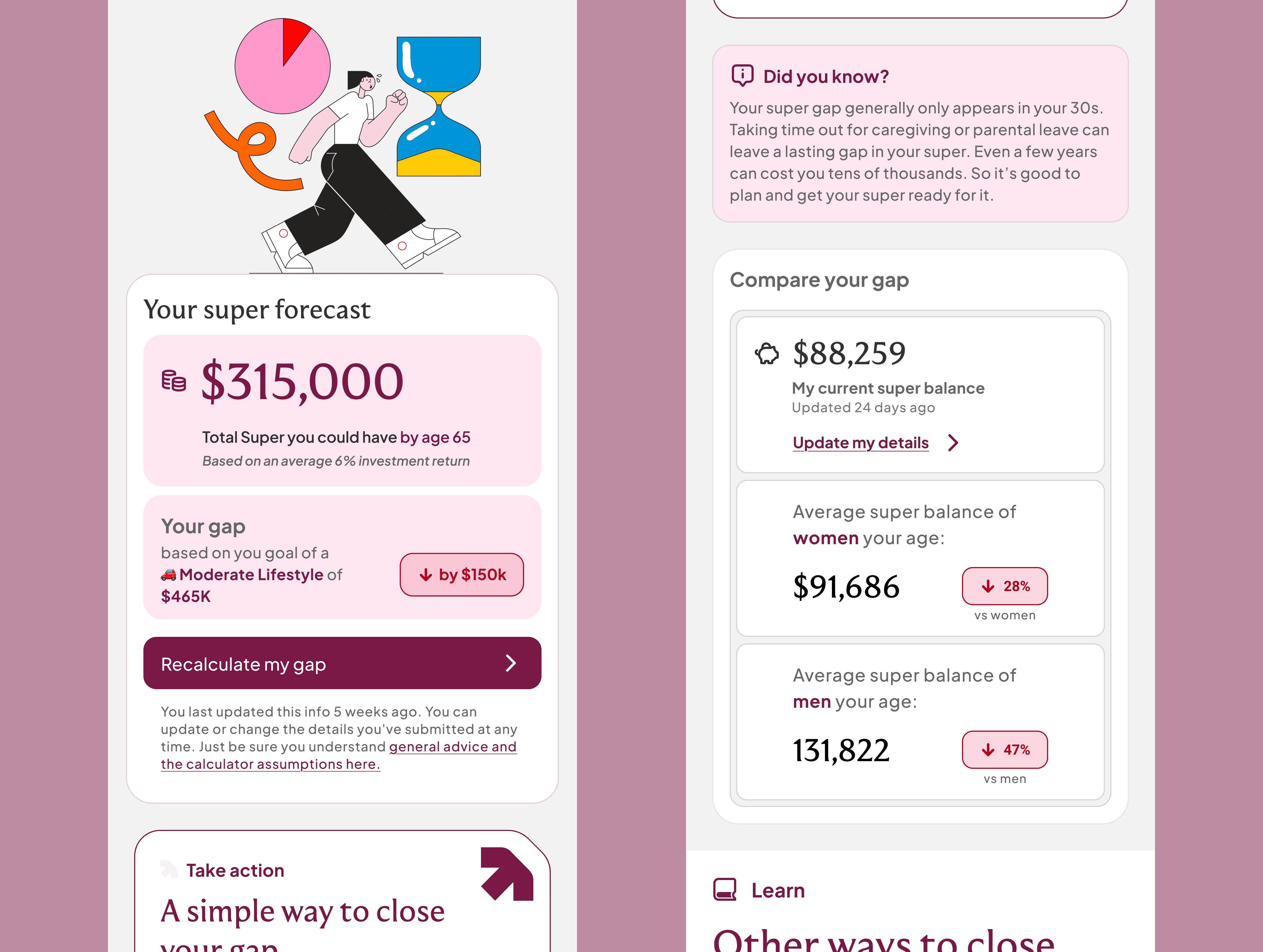
We’re in this together: Feedback showed us that the interface, tone of voice, and product experience reinforced a sense of belonging for the target audience. Community and purpose act as key drivers of engagement, trust, and action.
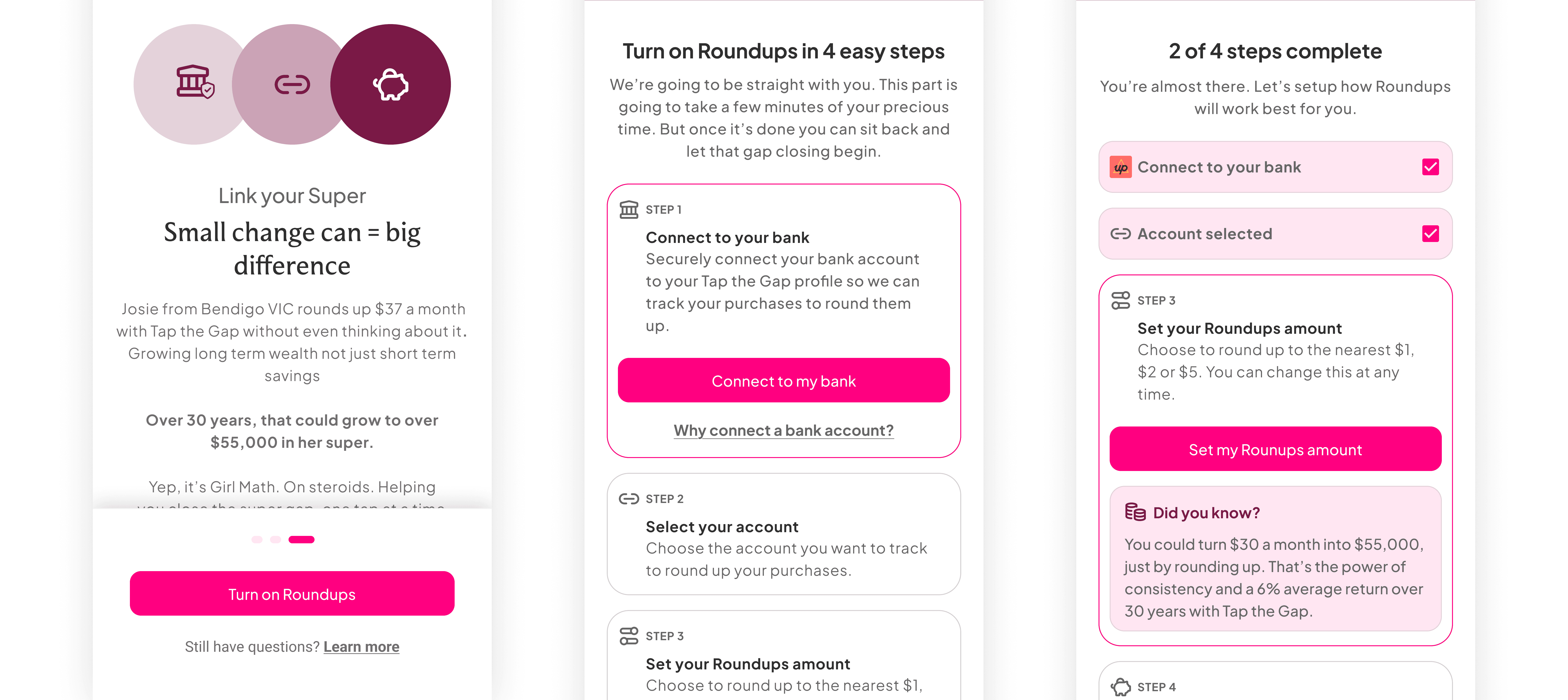
Building trust: Clear signposting, a safe space to explore, and relatable microcopy allowed users to build trust at sensitive moments in the UX journey.
When I think about it…
What went well
Instead of gatekeeping and bottlenecking, I coached the founder and delivery team towards high-value independence. The founder rapidly learned to run user testing sessions and synthesise raw observation data. The shared ownership boosted morale and cohesion, ensuring the product vision was validated by the whole delivery team, not just the design team. This also acted as a force multiplier for our small team: we maintained a weekly testing cadence (50+ tests) without experiencing a design bottleneck. The result was rapid delivery throughput matched by high-fidelity insights—a rare balance of speed and quality in an early-stage startup.
What I learned
This project validated that a Principal Designer doesn't need to be "in the weeds" to drive success, even in a high-stakes, constrained-budget environment. By applying targeted, high-value strategic interventions, I gave the founder the confidence and the team the direction they needed. I was reminded that leading from the principal seat requires restraint. Resisting the urge to jump into Figma and "fix" things myself, I had the greatest impact by empowering the delivery team to own the solution while I provided the guardrails.
Older